
 |
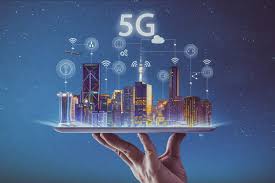
"Discover the impact of 5G network rollout across the United States." |
Introduction
The introduction of 5G networks in the United States marks a significant advancement in telecommunications, offering faster speeds, lower latency, and enhanced connectivity. As 5G expands, it promises to revolutionize various industries, from healthcare to entertainment, and improve everyday life for consumers. This article examines the current state of 5G in the U.S., its benefits, challenges, and future outlook.
Overview of 5G Technology
5G, or fifth-generation wireless technology, is designed to provide significantly faster data rates, lower latency, and greater capacity compared to 4G LTE. Key features of 5G include:
- Enhanced Speed: 5G networks can achieve speeds over 1 Gbps, far outpacing 4G.
- Low Latency: Latency can be reduced to as little as 1 millisecond, enabling real-time applications such as gaming and remote surgery.
- Increased Capacity: 5G can support more devices simultaneously, essential for densely populated areas and the growing Internet of Things (IoT).
Current State of 5G in the U.S.
Major Carriers
Three major carriers are at the forefront of the 5G rollout in the U.S.:
- Verizon: Focuses on high-band 5G (mmWave), delivering ultra-fast speeds in urban areas.
- AT&T: Uses a combination of low, mid, and high-band spectrum to offer broader coverage.
- T-Mobile: Emphasizes mid-band spectrum, providing a balance of speed and coverage.
Coverage and Availability
- Urban vs. Rural: 5G coverage is more widespread in urban areas, with rural regions lagging due to infrastructure challenges.
- Expansion Efforts: Carriers are working to expand 5G coverage, with many aiming for nationwide availability in the coming years.
Benefits of 5G
1. Improved Connectivity
5G will enable a more connected world, powering IoT, smart cities, and autonomous vehicles.
2. Enhanced User Experience
Consumers will benefit from faster downloads, smoother streaming, and improved mobile gaming.
3. Economic Growth
5G is expected to contribute significantly to the U.S. economy by driving innovation and creating new jobs.
Challenges and Concerns
1. Infrastructure Costs
Building the infrastructure for 5G is costly and time-intensive, particularly in less populated areas.
2. Health Concerns
Some people have concerns about potential health risks from increased electromagnetic frequencies, though scientific consensus generally considers 5G safe.
3. Security Risks
The increased connectivity brought by 5G raises concerns about cybersecurity vulnerabilities and data privacy.
Future Prospects
Innovations and Applications
- Telemedicine: 5G can support remote consultations and real-time health monitoring.
- Smart Cities: Enhanced connectivity will facilitate smart infrastructure, traffic management, and energy efficiency.
- Augmented Reality (AR) and Virtual Reality (VR): Expect improvements in gaming, training, and education through advanced AR and VR technologies.
Ongoing Developments
The U.S. government and private sector are investing heavily in 5G technology, with efforts aimed at accelerating deployment and addressing challenges.
Conclusion
The 5G network in the United States is at a critical juncture, with significant developments on the horizon. While the benefits are substantial, there are challenges that need to be addressed through careful planning and investment. As 5G continues to roll out, it has the potential to transform various aspects of daily life and drive economic growth.
Call to Action
Keep up with the latest 5G developments and consider how this technology may impact your life and business in the near future.
FAQs
Q1: When will 5G be available nationwide in the U.S.?
A: While 5G coverage is expanding quickly, full nationwide availability may take several more years.
Q2: Will 5G replace my current 4G service?
A: Initially, 5G will complement existing 4G networks, but over time, many users will transition to 5G.
Q3: What devices are compatible with 5G?
A: Many new smartphones and devices are 5G-compatible; check with your device manufacturer for specific details.
Q4: Is 5G safe?
A: Current research indicates that 5G is safe, though studies are ongoing to monitor its health impact.
References
- Federal Communications Commission (FCC)
- 5G Americas
- Industry reports on 5G technology and its impact on the economy.
No comments: